Executive Search: Chief Financial Officer, The Canyon Club at Four Hills

Chief Financial Officer
The Canyon Club at Four Hills
Albuquerque, New Mexico

CLUB OVERVIEW
The Canyon Club at Four Hills is a private, member-focused golf and country club located in Albuquerque, New Mexico, set within the established Four Hills community at the base of the Sandia Mountains. Surrounded by rolling terrain, mature trees, and protected open space, the Club offers expansive views of the surrounding foothills and the Albuquerque skyline, creating a distinctive high-desert club environment.

Founded in 1959, the Club is anchored by an 18-hole, par-72 championship golf course designed to integrate with the natural topography, featuring elevation changes, tree-lined fairways, and challenging playing conditions influenced by canyon winds. The golf program is supported by a full practice facility, instructional programming, and an active calendar of member events.

The Canyon Club offers a well-rounded member lifestyle extending beyond golf, including a full-service clubhouse with multiple dining venues, racquet sports (tennis and pickleball), a swimming pool complex, and a fitness center. A robust schedule of social, recreational, and family-oriented programming supports a vibrant, year-round member experience.

The Club is seeking a Chief Financial Officer (“CFO”) to join its senior leadership team. This role will support the Club in advancing disciplined financial stewardship, informed strategic decision‑making, and the long‑term financial sustainability of a complex, member‑owned private club and community.

POSITION SUMMARY
The Chief Financial Officer (CFO) is the senior financial executive of The Canyon Club, responsible for the overall financial management, strategy, and integrity of the Club. This role serves as a key advisor to the General Manager and Board of Directors, providing disciplined financial leadership aligned with the Club’s mission, fiduciary responsibilities, and long-term sustainability.

The CFO oversees all financial operations including accounting, treasury, budgeting, and financial planning. The position ensures the accuracy, transparency, and timeliness of financial reporting while maintaining strong internal controls, regulatory compliance, and a member-focused financial environment. With direct oversight for a departmental team of two supporting staff members, this role remains hands-on in some capacity, requiring a leader who can both participate effectively in key functional requirements and engage as a strategic leader throughout the Club organization. The CFO partners with department leaders to support operational excellence and enhance the overall member experience.

View Full Position Description & Requirements

Apply for the Position

SEARCH EXECUTIVE TEAM


Michael Gregory
Managing Director & Partner 
michael.gregory@ggapartners.com



Peter Holt
Director
peter.holt@ggapartners.com



Brad Chambers
Manager
bradley.chambers@ggapartners.com

Executive Search: General Manager/COO, The Thornhill Club

General Manager/Chief Operating Officer
The Thornhill Club
Thornhill, Ontario, Canada

CLUB OVERVIEW

The Thornhill Club was established as a golf club in 1922. It became an all-season club with the opening of the curling rink in 1963. As one of Canada’s most historic and renowned private golf clubs, the Club is conveniently located near the heart of Toronto and takes pride in offering its members an innovative approach to cuisine and protection of the environment. With golf, tennis, curling, fitness, yoga and more, families make The Thornhill Club their home away from home.

The Club is home to a championship 18-hole golf course, an executive 9-hole course, state-of-the-art Har-Tru clay tennis courts, six sheets of curling ice, an outdoor swimming pool, a new fitness centre, and a vast array of social offerings.

Renowned golf course architect Stanley Thompson designed the 18-hole golf course, which has hosted the PGA Canadian Open. The present course retains the classic golf course design and features of a Thompson course, with strategic bunkering, the illusion of distance, dramatic variations in hole length and fairway width, intricate mounding, subtly breaking greens, and elevated tees. The clubhouse, amid well-landscaped gardens and walkways, is situated to provide a scenic vista overlooking the golf course.

ABOUT THE CLUB

  • Member-Owned Private Club
  • Total Member Count: 1200
  • Gross Revenue: $10.4 million

THE OPPORTUNITY

The General Manager / Chief Operating Officer is the leader of Thornhill’s management team and is responsible for all facets of the Club’s operations. The GM / COO manages and directs the Club’s employees subject to and in accordance with the direction of the Board of Directors.

Direct reports include the Head Golf Professional, Greens Superintendent, Controller, Executive Chef, Food & Beverage Manager, Sports & Activities Manager, Facilities Manager, Marketing & Communications Manager.

View Full Position Description & Requirements

Apply for the Position

SEARCH EXECUTIVE TEAM


Michael Gregory
Managing Director & Partner 
michael.gregory@ggapartners.com


Peter Holt
Director
peter.holt@ggapartners.com


Aligning Stewardship with Strategic Investment

Private club leaders face a dual challenge when planning for capital needs: preserving the integrity of existing assets while strategically investing in facilities and amenities that will define their future relevance.

Member expectations and experiences continue to rise, influenced by generational transition and higher initiation fees. As a result, the approach to capital planning must evolve. It cannot be reactive or limited to like-for-like replacements. Effective stewardship requires rigorous financial discipline and a keen understanding of member priorities, industry trends, and evolving standards in hospitality.

Matching Funding With Use
Private clubs have traditionally relied on a combination of tools to fund capital investment with initiation fees, monthly capital fees, assessments and debt financing being the most common.

In recent years, demographic changes have reduced the predictability of initiation-based funding, particularly as longer member life cycles lower turnover. This creates a risk to financial stability that is dependent on factors over which the club has less control.

The accounting matching principle—under which members contribute toward the assets they consume—offers a useful framework for evaluating capital strategy. Historically, initiation-based models have not always achieved this alignment. Increasingly, clubs are adopting recurring capital fees to strengthen inter-generational equity and create a more stable, predictable funding source. This approach ensures that current members support both present operations and future capital needs.

From a financial stewardship perspective, amortization (depreciation) expense can serve as a useful proxy for asset consumption. As a benchmark, annual maintenance capital investment should approximate the club’s straight-line amortization. While not a precise measure of lifecycle requirements, this provides a practical indicator of whether a club is reinvesting at a rate consistent with asset consumption. Persistent reinvestment below amortization levels may indicate deferred renewal and increasing future pressure. This benchmark applies to maintenance capital only and does not account for growth investment.

Structuring Contributions Across Generations
Generational differences influence preferred funding structures. Longer-tenured members often favor lump-sum mechanisms, consistent with traditional ownership models. Newer members tend to prefer predictable, distributed contributions, which provide transparency and cash flow stability. These preferences reflect expectations about financial structuring, rather than inherent attitudes toward debt or risk. Recognizing these distinctions allows clubs to design funding strategies that resonate broadly while maintaining fairness and sustainability.

The Importance of Context
No universal funding model exists for private clubs. Additionally, major capital investments generally require member approval through formal governance. A technically sound project funding structure may be perceived as impractical if it misaligns with member priorities or club culture resulting in delays while projects await membership approval. Thus, capital planning must integrate financial analysis with member perspective related to age, tenure, membership category, culture and how they specifically use the club.

CAPITAL PLANNING BEST PRACTICES

Clubs seeking long-term sustainability follow three best practices:

Align Capital Planning with Strategic Direction
Capital investment should be guided by the club’s strategic plan. Maintenance requirements and growth capital must support the long-term vision. Advancing major projects without strategic clarity risks misaligned investment and sub-optimal use of member resources.

Maintain a Holistic Capital Plan
Effective stewardship requires understanding both existing infrastructure and future priorities. Reserve studies by qualified engineers identify asset condition replacement timing along with an analysis to smooth any high spikes in year over year financial projections to provide recommendations on extending the life of certain assets. Growth capital planning is more complex, requiring member feedback, market awareness, industry trends, and insight into amenities that will sustain engagement and attract prospective members. Integrating both dimensions yields a unified view of capital priorities aligned with funding strategies.

Develop a Funding Model Consistent with Membership Culture
The appropriate combination of capital fees, assessments, debt, and initiation contributions should reflect the financial preferences and demographic composition of the membership.

Effective capital planning in private clubs balances fiduciary stewardship with strategic foresight while considering all member demographics in order to gain voting approval. Clubs that succeed in this area are those that recognize capital investment not merely as a process of replacement, but as a deliberate mechanism for sustaining relevance and delivering long-term member value.

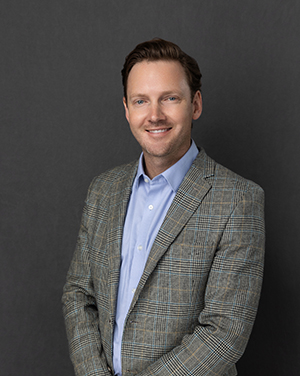
This article was written by Founding Partner Stephen Johnston. It appeared in the Spring edition of NCA’s Club Director Magazine.

Menu